
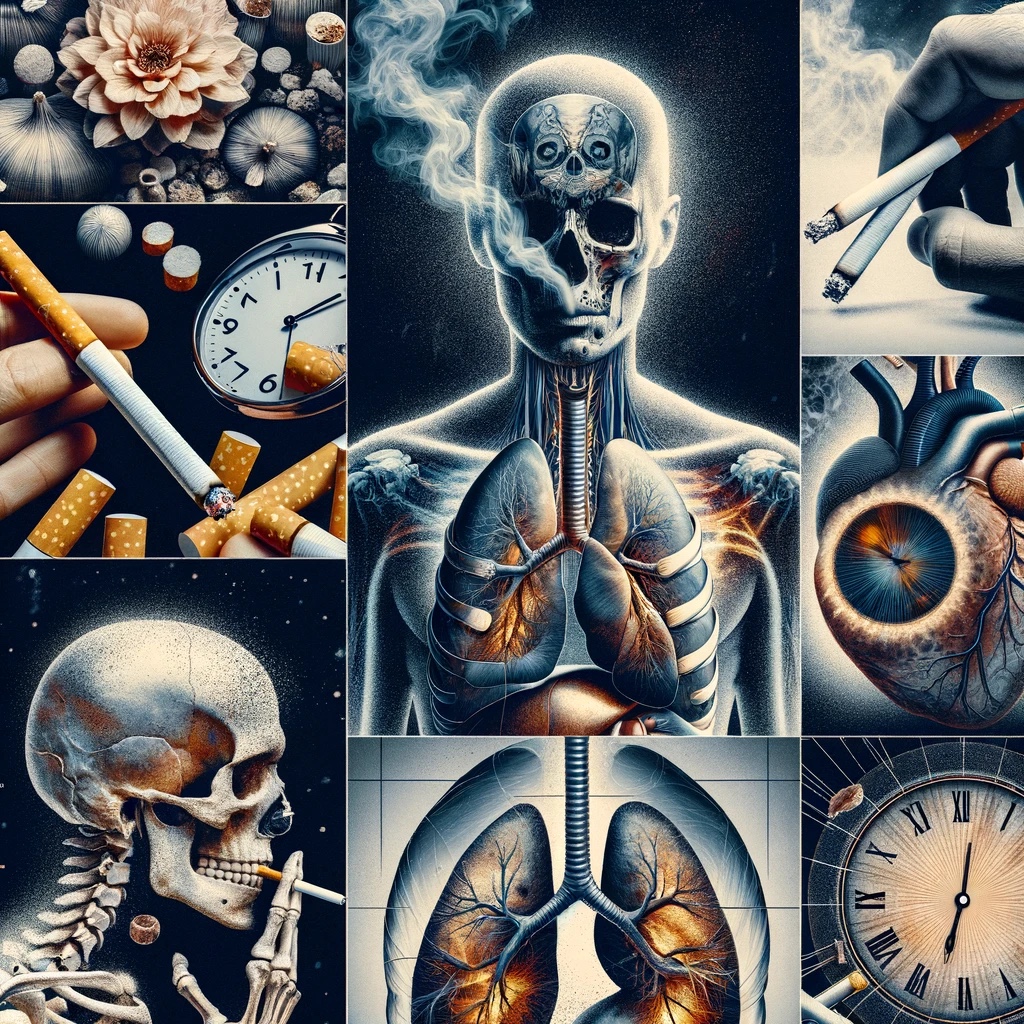
Smoking is one of the largest avoidable health hazards worldwide. Despite known risks, many continue to smoke daily. This article explores the impacts of smoking on health span and longevity and how quitting can improve health and extend life.
Chemical Composition of Smoke:
- Toxic substances: Cigarette smoke contains over 7,000 chemicals, including at least 250 harmful substances and 70 carcinogens. Notably harmful are tar, carbon monoxide, nitrogen oxides, free radicals, metals, and radioactive compounds.
- Effects on the body: These substances directly damage cells and tissues, cause inflammation, impair immune function, and can trigger mutations and cancer.
Effects on Specific Organ Systems:
- Respiratory system: Smoking is the leading cause of chronic obstructive pulmonary disease (COPD) and lung cancer, damaging airways and alveoli, leading to chronic bronchitis, emphysema, and increased infection risk.
- Cardiovascular system: Smoking leads to atherosclerosis, increases blood pressure, promotes blood clots, and causes heart attacks and strokes.
- Immune system: Smoking impairs immune response, increases susceptibility to infections, and slows wound healing.
- Reproductive system: In women, smoking can lead to fertility issues and increase pregnancy complications. In men, it can affect sperm quality and erectile function.
Smoking and Cancer:
- Direct link: Smoking is directly associated with at least 15 different types of cancer, including lung, mouth, larynx, stomach, and bladder cancers. Carcinogens in tobacco smoke damage the cells‘ genetic material, contributing to cancer development.
Smoking and Chronic Diseases:
- Respiratory diseases: Besides COPD and lung cancer, smoking also increases the risk of asthma and tuberculosis.
- Metabolic effects: Smoking affects metabolism and increases the risk of type-2 diabetes.
- Inflammation and oxidative stress: Smoking promotes systemic inflammation and oxidative stress, contributing to a variety of chronic diseases.
Smoking and Premature Aging:
- Skin aging: Smoking accelerates skin aging, leading to wrinkles and a characteristic gray skin color.
- Cellular aging: It can shorten telomere length, a marker for cellular aging, increasing the risk for age-related diseases.
Psychological and Behavioral Aspects:
- Addiction: Nicotine in cigarettes is highly addictive, affecting the brain’s reward center and making quitting challenging.
- Stress and smoking: Many smokers believe smoking reduces stress, though it can actually increase stress levels and reduce stress coping abilities.
This detailed examination underscores the extensive damage smoking inflicts on health, health span, and longevity. From the direct toxic effects of substances in tobacco to specific organ damage and broad systemic impacts, the urgency of smoking cessation for individual and public health is clear.
10 Tips to Quit Smoking and Drastically Increase Life Expectancy:
- Set a firm quit date: Choose a near future date and commit to it.
- Inform friends and family: Seek support and share your plan.
- Avoid triggers: Identify situations where you typically smoke and avoid them.
- Find replacement activities: Use gum, healthy snacks, or hobbies to distract.
- Nicotine replacement therapy: Consider patches, gums, or other nicotine replacement products.
- Counseling or group therapy: Seek professional help or join a support group.
- Exercise and healthy diet: Improve overall health to reduce the urge to smoke.
- Mindfulness and relaxation techniques: Practice stress management to avoid reaching for a cigarette during stressful moments.
- Set short and long-term goals: Celebrate small successes and keep long-term goals in mind.
- Stay persistent: Relapses can happen. View them as learning opportunities, not failures.
Conclusion
Smoking may accelerate the life clock, but it’s never too late to quit. Each smoke-free day is a step towards better health and a longer life. Encourage yourself to take control and enjoy the diverse benefits of a smoke-free life.
References
- „Health effects of cigarette smoking“ – Centers for Disease Control and Prevention
- „How tobacco smoke causes disease: The biology and behavioral basis for smoking-attributable disease“ – U.S. Department of Health and Human Services
- „The health consequences of smoking—50 years of progress: a report of the Surgeon General“ – U.S. Department of Health and Human Services
- „Tobacco“ – World Health Organization
- „Smoking cessation: a report of the Surgeon General“ – U.S. Department of Health and Human Services
- „Nicotine and Tobacco as Substances of Abuse in Children and Adolescents“ – Pediatrics
- „The Benefits of Quitting Smoking“ – American Heart Association
- „Quitting Smoking Among Adults“ – Centers for Disease Control and Prevention
Antworte auf den Kommentar von Epigenetics: Your Lifestyle as the Key to Health and Longevity – Longevity For YouAntwort abbrechen