
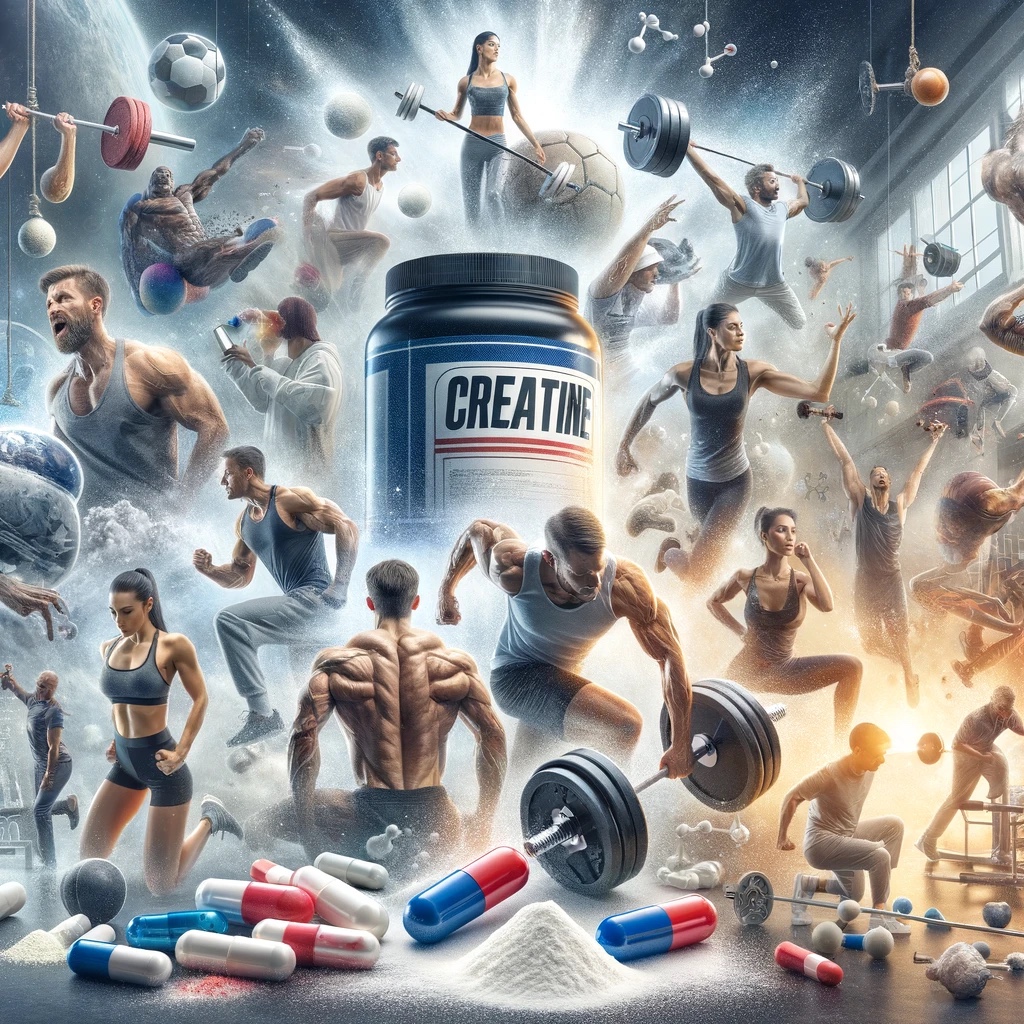
Creatine is a natural substance primarily found in muscles and the brain, critical for cellular energy supply. Popular as a dietary supplement, especially among athletes for its performance-enhancing and muscle-building properties, recent studies also suggest profound impacts on homocysteine levels, health span, and longevity. Creatine is one of the most researched supplements, and long-term intake is generally considered safe with no adverse side effects.
Creatine and Its Cellular Role:
- Energy Metabolism: Creatine is integral to cellular energy metabolism, especially in muscle and brain cells. It helps regenerate Adenosine Triphosphate (ATP), used for all cellular functions.
- Muscle Strength and Endurance: Creatine increases ATP availability in muscle cells, leading to improved strength, endurance, and recovery, especially during short, intense exercises.
Creatine and Homocysteine:
- Homocysteine Metabolism: Creatine contributes to converting homocysteine to methionine through the methylation process. This helps lower homocysteine levels, associated with an increased risk of cardiovascular diseases.
- Reduction of Cardiovascular Risks: By lowering homocysteine levels, creatine can help improve vascular health and reduce the risk of heart attacks, strokes, and other cardiovascular diseases.
Creatine and Health Span:
- Aging Process: Creatine can positively influence the aging process by supporting cells to work and repair efficiently. It has shown to maintain muscle health and function, especially vital in older age.
- Cognitive Functions: Creatine also affects brain health. Studies have shown an improvement in cognitive functions and potential role in neuroprotection, crucial for preventing age-related brain degeneration.
Creatine and Longevity:
- Prevention of Age-Related Diseases: Through its role in reducing homocysteine and supporting cell metabolism, creatine can help prevent or delay various age-related diseases, including muscle deterioration and cognitive impairments.
- Quality of Life: Creatine can improve quality of life by supporting physical performance, brain health, and overall cellular health.
Risks of Creatine:
- Hydration and Kidney Function: While generally safe, it’s important to maintain adequate hydration and monitor kidney function, especially in individuals with pre-existing kidney diseases.
This detailed discussion highlights creatine’s multifaceted impacts on health and its potential for enhancing health span and promoting longevity. Regulating homocysteine levels, supporting cell metabolism, and improving muscle and brain health are some of the key mechanisms through which creatine contributes to vitality and a longer life.
10 Tips for Ideal Use of Creatine:
- Forget the Loading Phase: Recent studies suggest that a high-dosed loading phase followed by a maintenance dose is unnecessary; you can directly transition to a sustained, lower-dose supplementation.
- Daily Dose: A daily dose of about 3-5g is recommended for longer-term intake.
- Drink Plenty of Water: Creatine can draw water into muscle cells; adequate hydration is therefore important.
- Combine with Carbohydrates or Protein: Taking creatine with a carb or protein source can improve absorption.
- Consider Timing: Taking creatine post-workout can be most effective. On rest days, it should be taken at a similar time.
- Use Creatine Monohydrate: Creatine monohydrate is the most researched and cost-effective form.
- Monitor Kidney Function: If you have pre-existing kidney problems, coordinate creatine intake with a doctor.
- Be Patient: The effects of creatine on performance and muscle mass often appear after several weeks.
- Note Quality and Purity: Choose high-quality and pure creatine products without unnecessary additives.
- Go Exercise: The most important point last. For creatine to unfold its extremely positive effects, it is essential to exercise regularly, as it nearly loses all its positive influences without regular physical activity.
Conclusion
Creatine is more than just a supplement for athletes. It has the potential to lower homocysteine levels, thus reducing the risk of cardiovascular diseases, and support muscle and brain health, leading to an increased health span and longevity. With proper application and dosage, creatine can be a valuable component of a healthy lifestyle.
References
- „Creatine supplementation and skeletal muscle metabolism for building muscle mass- Review of the potential mechanisms of action“ – Current Protein & Peptide Science
- „Effects of creatine supplementation on performance and training adaptations“ – Molecular and Cellular Biochemistry
- „Creatine supplementation and age-related diseases: A review“ – Experimental Gerontology
- „Creatine in type 2 diabetes: A randomized, double-blind, placebo-controlled trial“ – Medicine & Science in Sports & Exercise
- „Creatine supplementation and brain health“ – Nutrients
- „Homocysteine metabolism and the implications of hyperhomocysteinemia“ – Clinical Chemistry and Laboratory Medicine
- „Effects of creatine supplementation on cognitive function of healthy individuals: A systematic review of randomized controlled trials“ – Experimental Gerontology
- „The role of creatine in the management of muscular dystrophy: A systematic review“ – Neuromuscular Disorders
- „Creatine supplementation in the elderly: is it beneficial for cognitive and muscular function?“ – Nutrients
- „Long-term creatine supplementation improves muscular performance during resistance training in older women“ – European Journal of Applied Physiology
Kommentar verfassen