
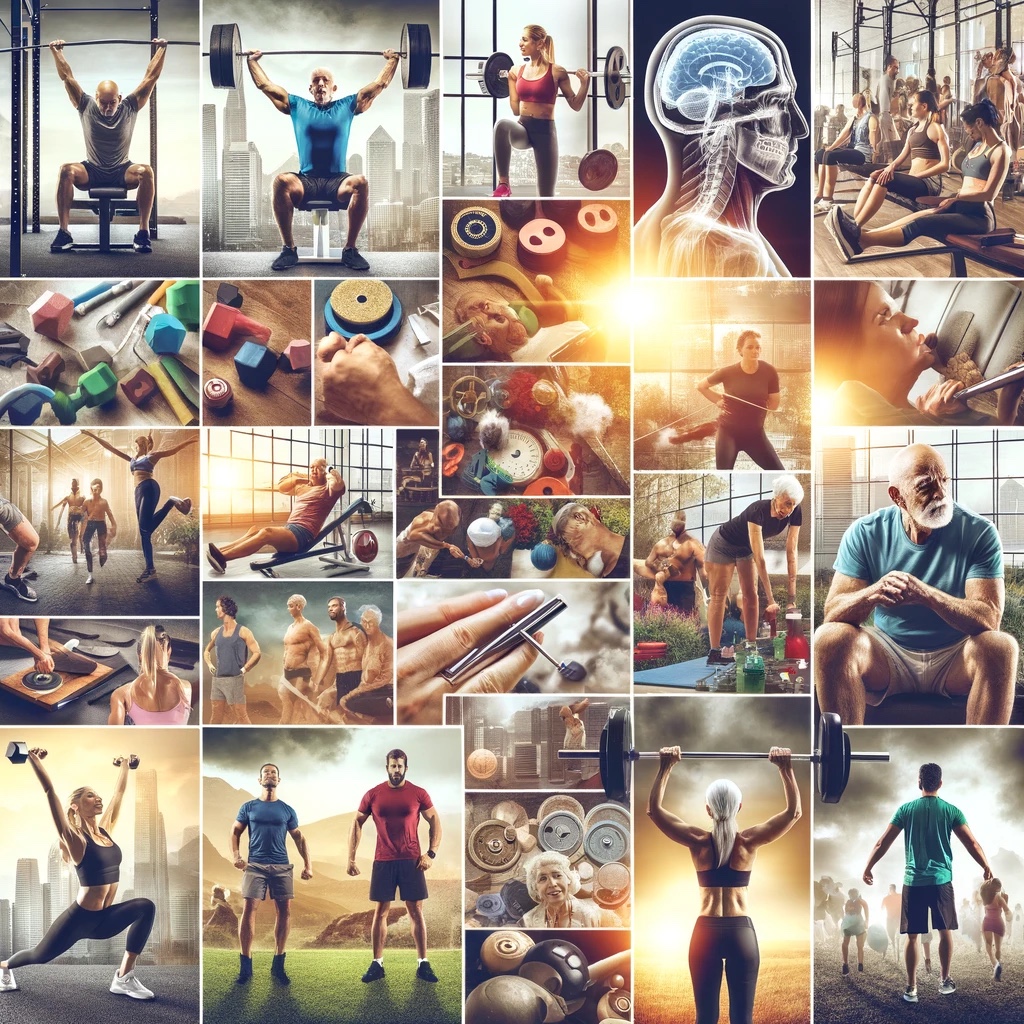
Ever wondered if those hours spent in the gym are doing more than just building muscles? Strength training, often misunderstood as mere bodybuilding, has far-reaching positive impacts on healthspan and longevity. This article dives into the world of strength training, revealing how regular workouts can enhance not just your strength but also your years and quality of life.
Key Points on Strength Training and Big Health
Strength training, involving activities like weightlifting, resistance training, and bodybuilding, aims to increase muscle strength and mass. However, its benefits extend well beyond muscle building:
- Enhancing body composition and metabolic health: Strength training reduces body fat and increases muscle mass, boosting basal metabolic rate. This leads to improved energy metabolism and better glucose regulation, reducing the risk of metabolic diseases like Type 2 diabetes.
- Strengthening the cardiovascular system: Regular strength training can lower blood pressure, improve heart function, and increase the elasticity of blood vessels, contributing to the prevention of cardiovascular diseases, a major cause of premature mortality.
- Preserving muscle strength and function: Muscle mass decreases with age, known as sarcopenia. Strength training counteracts this by promoting muscle retention and strength, crucial for maintaining mobility, improving balance, and ensuring independence in older age.
- Improving bone health: Strength training stimulates bone growth and increases bone density, reducing the risk of osteoporosis and related fractures.
- Reducing inflammation: Regular training can have anti-inflammatory effects and contribute to reducing chronic inflammation associated with various age-related diseases.
- Enhancing cognitive function: Studies indicate that regular strength training can also positively affect brain health, including improved memory and slowed cognitive decline.
- Boosting quality of life: Strength training can enhance overall well-being by improving self-esteem, contributing to a positive body image, and promoting mental health.
- Encouraging social interaction: Often conducted in groups or with a partner, strength training fosters social interactions and contributes to a supportive environment that also adds to overall life satisfaction.
These diverse effects demonstrate that strength training is much more than an activity to improve physical appearance. It’s a comprehensive strategy for promoting health and extending lifespan.
10 Tips for Health-Promoting Strength Training
- Regularity: Incorporate strength training 2-3 times per week into your routine.
- Variety: Use a mix of free weights, machines, and bodyweight exercises.
- Progression: Gradually increase resistance to drive muscle adaptation.
- Whole-body approach: Train all major muscle groups for balanced development.
- Technique: Focus on proper form to avoid injuries and maximize effectiveness.
- Recovery: Allow your body ample time to recover between training sessions.
- Nutrition: Support your training with a protein-rich plant-based) diet for muscle building and repair.
- Hydration: Stay well-hydrated, especially during workouts.
- Flexibility and Mobility: Incorporate stretching and mobility exercises to promote flexibility and muscle health.
- Professional Guidance: Consult a trainer if necessary to create a tailored and safe training plan.
Conclusion
Strength training is a powerful tool in your arsenal for health and longevity. With the right approach and discipline, it can help you become not just stronger but healthier and more resilient over the years. Consider strength training not just as a hobby but as a life investment—for more years to your life and more life to your years.
References
- „The effects of progressive resistance training on bone density: a review“ – Medicine & Science in Sports & Exercise
- „Strength training early in life has lasting effects“ – The University of New South Wales
- „Resistance Training is Medicine: Effects of Strength Training on Health“ – Current Sports Medicine Reports
- „The benefits of strength training for older adults“ – American Journal of Preventive Medicine
- „Strength Training and the Risk of Type 2 Diabetes and Cardiovascular Disease“ – Harvard Health Publishing
- „Role of Muscle in Longevity“ – Journal of Aging Research
- „Psychological benefits of strength training in adults“ – American Psychological Association
- „The relationship between muscle strength and mortality“ – Age and Ageing Journal
Antworte auf den Kommentar von Strengthen Your Bones: Robust and Mobile for Life! – Longevity For YouAntwort abbrechen