
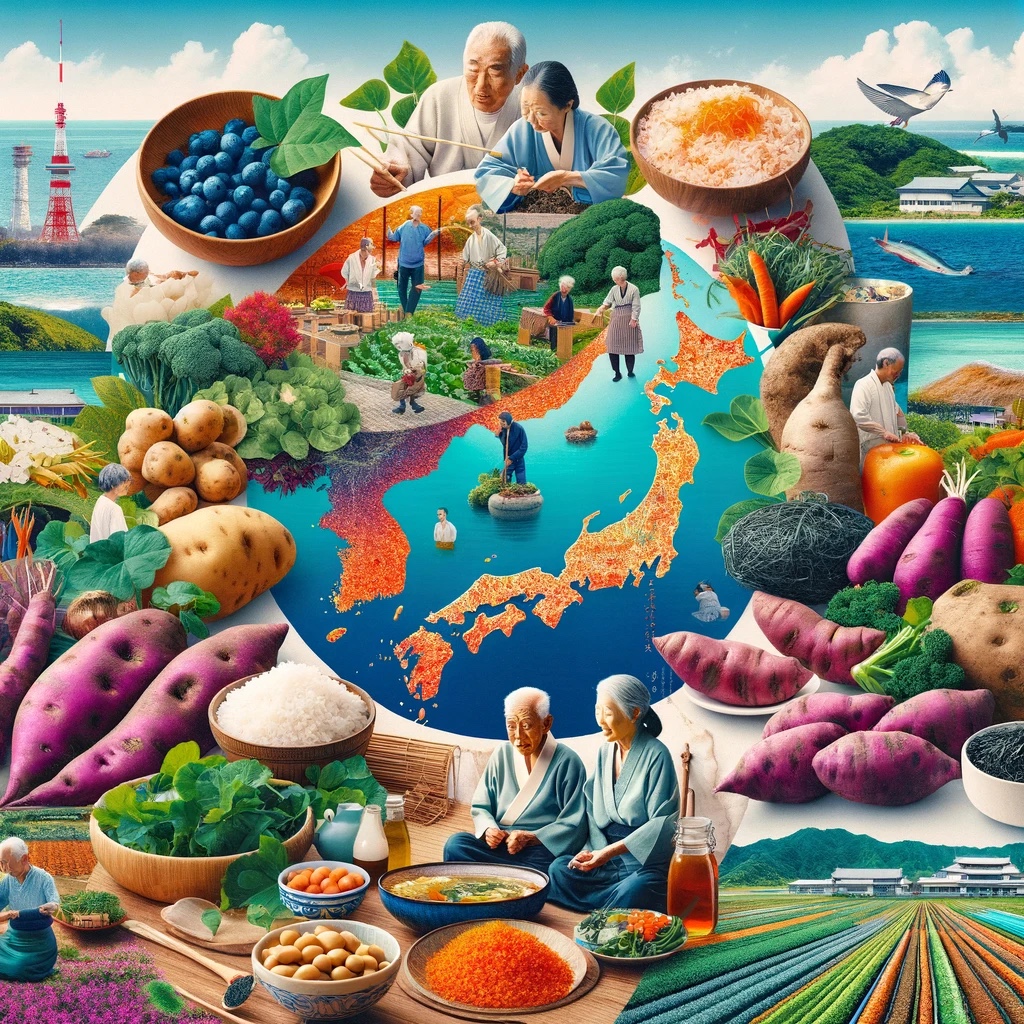
The Blue Zone of Okinawa, one of the five globally recognized “Blue Zones”, is famed for its high number of centenarians. This Japanese archipelago offers fascinating insights into lifestyle habits contributing to an exceptionally long and healthy lifespan.
Key Insights into Blue Zone Okinawa
Okinawan Dietary Habits:
- Plant-Based Diet: Focuses on a plant-based diet rich in vegetables (including a high intake of sweet potatoes and bitter melon/Goya), whole grains (mainly brown rice), soy products (like tofu & miso) and seaweeds.
- Moderate Fish Consumption: Fish is consumed in moderation, providing essential Omega-3 fatty acids.
- Reduced Meat and Dairy: Meat and dairy are consumed in very small amounts, reducing saturated fat intake in the diet.
Hara Hachi Bu – Eating to 80% Fullness:
- Calorie Restriction: This practice leads to natural calorie restriction, associated with longevity and a reduced risk of age-related diseases.
- Obesity Prevention: Hara Hachi Bu aids in weight control, preventing obesity and related health risks.
Social and Cultural Factors:
- Strong Community Ties: Close-knit social structures provide emotional and social support, reducing stress and contributing to mental health. Locals maintain close social bonds in their „Moais,“ support networks that encourage lifelong friendship and social cohesion.
- Family Bonds: Strong family relationships and a deep sense of community contribute to emotional well-being.
- Role of Elders: In Blue Zone Okinawa, elders are highly valued, contributing to positive self-esteem and a motivating life perspective.
Physical Activity in Daily Life:
- Integrated into Daily Routine: Physical work, gardening, and regular movement are integrated into daily life into old age, not structured as separate „workouts.“
- Long-Term Mobility: Maintaining physical activity contributes to long-term mobility and independence in old age.
- Lifelong Work: Many elders stay active, contributing through lifelong professions or hobbies.
Mental Health and Wellness:
- Mindfulness Practices: Traditional practices like meditation and tea ceremonies promote mindfulness and inner peace.
- Lifelong Learning: Continuous mental challenges through learning and social interaction keep the brain active and healthy.
Traditional Healing Methods:
- Natural Remedies: Using herbs and traditional healing methods for illness treatment in Blue Zone Okinawa emphasizes prevention and natural healing.
- Holistic Health Approach: Okinawan view on health encompasses physical, mental and spiritual aspects.
Minimal Consumption of Processed Foods:
- Natural Foods: In Blue Zone Okinawa, there’s a preference for consuming fresh, locally grown foods over processed products, leading to lower intake of preservatives, artificial additives and salt.
- Health Benefits: This natural diet positively affects the cardiovascular system and reduces the risk of chronic diseases like diabetes and certain cancers.
Moderate Alcohol Intake and Avoidance of Smoking:
- Green Tea: Instead of alcoholic beverages, green tea rich in antioxidants is often consumed.
- Lifestyle Factors: Low prevalence of smoking and moderate alcohol consumption contribute to lower rates of cardiovascular diseases and lung cancer.
Positive Outlook and Stress Management:
- Ikigai – Life Purpose: Finding personal Ikigai gives Okinawans a clear purpose in life, contributing to their happiness and well-being.
- Resilience: Managing stress through positive attitudes, community bonding and spiritual practices builds resilience and can prolong life.
Importance of Sleep:
- Adequate Rest: Good and sufficient sleep is another key aspect of the lifestyle in Blue Zone Okinawa, contributing to overall health and longevity.
- Sleep Quality: Maintaining a regular sleep schedule and avoiding sleep disturbances are crucial for preserving cognitive function and preventing diseases.
10 Tips for a Long and Healthy Life like in Blue Zone Okinawa
- Practice „Hara Hachi Bu“: Eat until you’re 80% full to avoid overeating.
- Increase Vegetable Intake: Incorporate more vegetables into your diet, especially sweet potatoes.
- Maintain Social Networks: Build and nurture strong social and familial relationships.
- Stay Physically Active: Integrate natural movements into your daily life through gardening or walking.
- Find Your Ikigai: Discover and pursue your life purpose.
- Avoid Smoking and Limit Alcohol: Follow the healthy living habits of Okinawans.
- Opt for Traditional Diet: Prefer a traditional, plant-based diet.
- Meditation and Mindfulness: Incorporate regular meditation or mindfulness exercises into your daily routine.
- Long-Term Vocation: Engage in activities or professions that bring joy and satisfaction even in older age.
- Learn from Elders: Draw wisdom and life lessons from the experiences of older people.
Conclusion
The lifestyle in Blue Zone Okinawa offers valuable lessons for a long and fulfilled life. By being inspired by their habits, we can extend our health span and improve our quality of life.
References
- „The Okinawa Program“ – Bradley J. Willcox, D. Craig Willcox und Makoto Suzuki
- „The Blue Zones: Lessons for Living Longer From the People Who’ve Lived the Longest“ – Dan Buettner
- „Okinawa: The Secret of Longevity“ – Gerontological Society of America
- „Diet, Lifestyle, and Longevity in Okinawa“ – Journal of the American College of Nutrition
- „Health Habits and Practices in Okinawa Versus the United States“ – Population and Development Review
- „Socio-cultural Factors and Longevity in Okinawa“ – Journal of Cross-Cultural Gerontology
- „Ikigai: The Japanese Secret to a Long and Happy Life“ von Hector Garcia und Francesc Miralles
- „Okinawa: A Model of Healthy Aging“ – Journal of the American Geriatrics Society
Antworte auf den Kommentar von Sweet Potatoes: The Super Root Vegetable for a Long Life – Longevity For YouAntwort abbrechen