
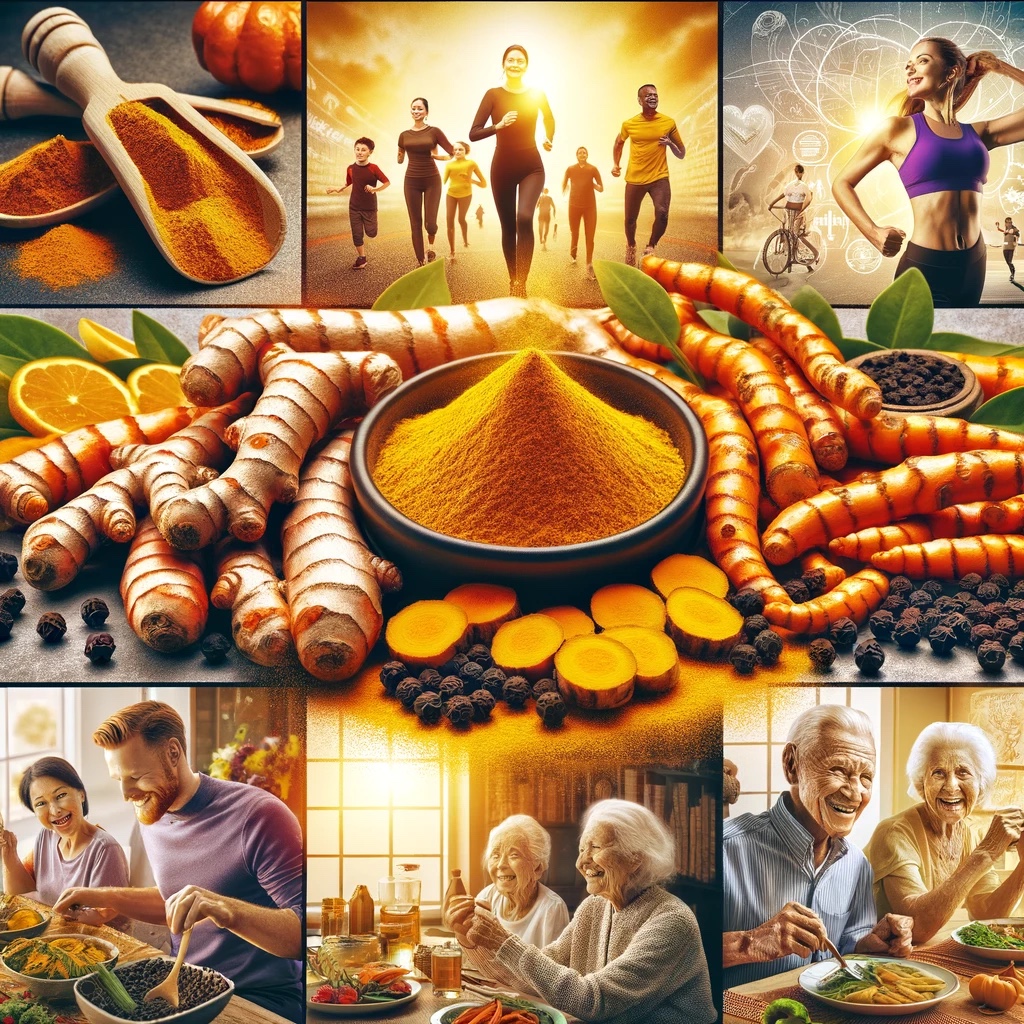
Turmeric, a golden spice traditionally used in Indian cuisine, is known for its anti-inflammatory and antioxidant properties. Its main active ingredient, curcumin, has been used for centuries in Ayurvedic medicine. This article discusses the benefits of curcumin on health span and longevity.
Key Points on Curcumin
Turmeric and Curcumin – An Overview:
- Chemical Structure: Turmeric is the spice derived from the root of the Curcuma longa plant. Curcumin is the main polyphenol in turmeric responsible for its vibrant yellow color and a host of health benefits.
- Bioactivity: While turmeric contains many compounds, curcumin is particularly known for its potent antioxidant and anti-inflammatory effects.
Antioxidant Properties of Curcumin:
- Free Radicals and Protection: Curcumin neutralizes free radicals and reduces oxidative damage to cells and DNA, contributing to a reduction in age-related degeneration.
- Synergistic Effect: Curcumin works synergistically with other antioxidants in the body, enhancing its effectiveness.
Anti-inflammatory Effects of Curcumin:
- Pathways and Molecules: Curcumin influences several biochemical pathways and inhibits molecules involved in the inflammatory response, such as NF-kB, cytokines, and enzymes.
- Chronic Inflammation: By reducing chronic inflammation, curcumin helps prevent numerous age-related diseases.
Curcumin and Heart Health:
- Endothelial Function: Curcumin improves the function of endothelium, the lining of blood vessels, leading to better regulation of blood pressure and reduced risk of atherosclerosis.
- Cholesterol Reduction: Curcumin can help lower LDL cholesterol and increase HDL cholesterol, further reducing the risk of cardiovascular diseases.
Curcumin and Brain Health:
- Neuroprotective Effects: Curcumin promotes neuronal health by supporting the formation and plasticity of neurons and countering neurodegenerative processes.
- Cognitive Enhancement: Evidence suggests curcumin can improve memory and cognitive functions, possibly by reducing amyloid plaques and inflammation in the brain.
Curcumin and Cancer Prevention:
- Cell Cycle Control and Tumor Growth Inhibition: Curcumin can affect the cell cycle and inhibit the growth of cancer cells.
- Apoptosis Induction: It can induce apoptosis, programmed cell death, in cancer cells while protecting healthy cells.
Curcumin and Digestive Health:
- Digestive Aid: Curcumin can aid digestion and reduce symptoms of bloating and gas.
- Bile Production and Detoxification: Curcumin stimulates bile production and supports liver detoxification.
- Anti-ulcerogenic Effect: Curcumin can protect the stomach lining and contribute to the treatment and prevention of stomach ulcers.
Curcumin and Longevity:
- Health Span: By reducing inflammation, oxidative stress, and chronic diseases, curcumin can contribute to an extended healthy life span.
- Molecular Mechanisms: Curcumin influences various molecular targets and pathways important for lifespan regulation.
This comprehensive analysis shows how turmeric and particularly its active ingredient curcumin play a role in preventing and treating various health issues and can contribute to improving health span and longevity. With impressive antioxidant and anti-inflammatory properties, they offer great potential as part of a healthy lifestyle.
10 Tips for Efficient Unfolding of Curcumin Effects:
- Add turmeric to your meals: Use it in curries, soups, or as a spice for vegetables.
- Combine with black pepper: Piperine, a component of black pepper, can increase the absorption of curcumin by 10 to 20 times.
- Tea or golden milk: Prepare beverages like turmeric tea or golden (plant-based) milk.
- Consider supplements: If you want the benefits of curcumin without regular consumption of turmeric, consider taking supplements.
- Regular intake: For best results, incorporate turmeric or curcumin regularly into your dietc(even on not-working-out days).
- Focus on quality: Choose high-quality, pure turmeric.
- Consult with your doctor: Especially if you are taking medications or have health concerns.
- Use topically: Turmeric can also be used externally in pastes for skincare and wound healing. Beware of its persistent yellow staining!
- Stay hydrated: This supports the body’s ability to efficiently use and process nutrients.
- Monitor your body: Pay attention to how your body reacts to turmeric and curcumin and adjust the dosage accordingly.
Conclusion
Turmeric with its main active ingredient curcumin is more than just a spice; it’s a true „superhero“ in the fight against inflammation, aging, and diseases. With its antioxidative and anti-inflammatory properties, it can contribute to improving health span and promoting longevity. Integrate turmeric or curcumin into your life daily with a pinch of freshly ground pepper (about 1/4 teaspoon of turmeric), and enjoy the vibrant colors and diverse benefits it ignites.
References
- “Curcumin: A Review of Its’ Effects on Human Health” – Foods
- “The golden spice: curcumin and its role in chronic diseases” – Advances in Experimental Medicine and Biology
- “Curcumin, an active component of turmeric in the prevention and treatment of ulcerative colitis” – Journal of Clinical Immunology
- “Role of curcumin in disease prevention and treatment” – Advanced Biomedical Research
- “Antioxidant and anti-inflammatory properties of curcumin” – Advances in Experimental Medicine and Biology
- “The effect of curcumin on aging and longevity” – Biogerontology
- “Curcumin and cardiovascular diseases: a perspective” – BioFactors
- “Curcumin and cancer: An “old-age” disease with an “age-old” solution” – Cancer Letters
Kommentar verfassen